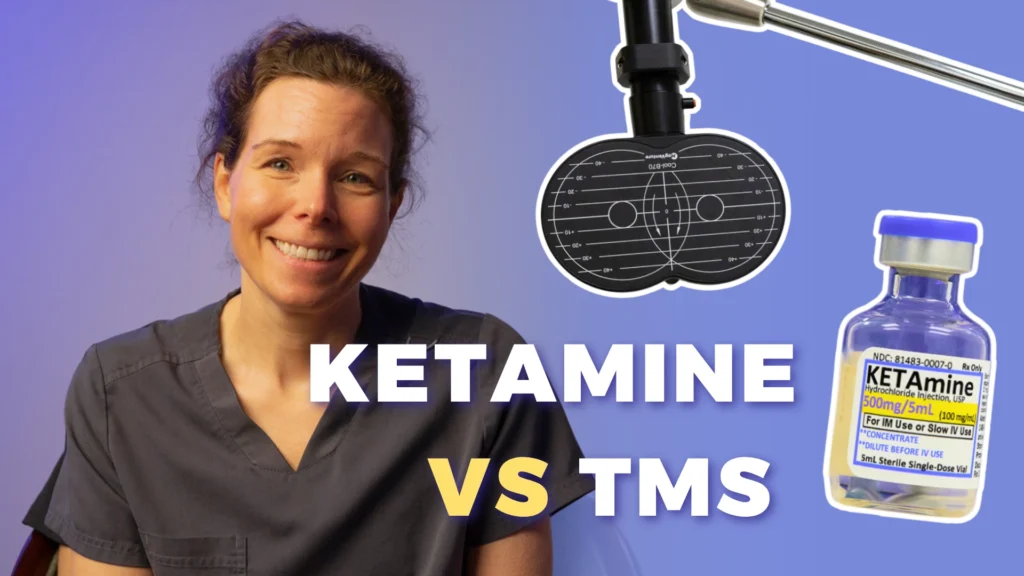
TMS and ketamine are both highly-effective interventional treatments for mental health symptoms and conditions, including depression, anxiety, OCD, and other mood disorders and some pain conditions. They look wildly different at a quick glance, and they rely on totally different technologies. And yet, they have surprising similarities — not just in what they can help…
- Machine vs Medication
- Non-Invasive vs Infusion
- Targeted vs Systemic
- Electrical vs Chemical
- Act on neurons.
- Modulate glutamatergic transmission. Glutamate pathway effects are thought to be central to how both of these procedures work to improve neural activity and improve mood regulation
- Induce Synaptic Plasticity, also called Neuroplasticity. This is part of the promotion of healthy neuron activity and, importantly, may permit changes in the default mode network, helping to resolve unhealthy ruminating thought and activity patterns
- Reduce inflammatory markers affecting neurons. Growing research suggests that inflammation is related to poor neuron activity and that both procedures may be beneficial in part due to their anti-inflammatory effects.
- Provide rapid-acting and lasting reduction of depression symptoms and symptoms of other conditions for many people – especially with infusion treatments for ketamine and when using accelerated TMS protocols.