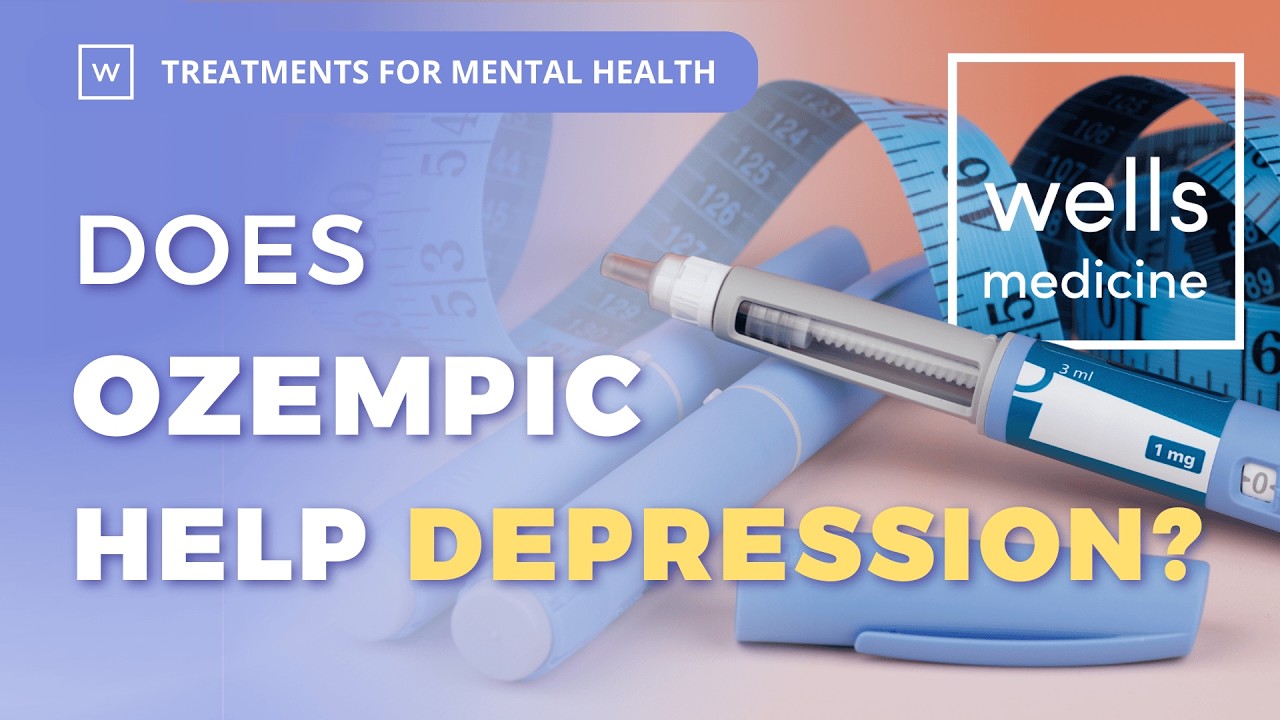
Ozempic and other GLP-1 medications can be effective for managing diabetes and weight loss, but do they also have an impact on mood and mental health?
How these medications work
GLP-1 medications — including Ozempic, Wegovy, semaglutide, Zepbound, Mounjaro, tirzepatide, and others — are being increasingly prescribed to help manage diabetes and promote weight loss, and can be very effective for these indications.
These are injection medications that work by slowing gastric emptying, slowing the rise of blood sugar in the bloodstream. GLP-1s naturally decrease the amount of food that patient’s are eating by making it harder for patients to want to eat more food. Patients may feel full more easily, and may feel ill or have vomiting if they eat too much food. They very quickly adjust to having much smaller meals. Patients may also develop food aversions to specific food groups that similarly slow gastric emptying, such as fats or proteins.
These changes may result in significant weight loss and better blood sugar control.
For these reasons, GLP-1s have been increasingly prescribed to help manage diabetes and weight loss, and are a much less invasive and much more reversible alternative to stomach procedures such as gastric bypass surgery or duodenal switch surgery.
As more of our patients have started taking these medications, they ask us whether GLP-1s will have an impact on their mental health.
The upsides
One positive effect we see for patients taking these medications is a reduction in intake of alcohol. For many patients who previously were having a lot of difficulty with alcohol, they find that they no longer even think about having a drink. For patients who were self-medicating with alcohol and had drinking behaviors that may not have been healthy, they find it a lot easier to stop using alcohol when it was previously very difficult to give up. This can have a big impact on mental health — without alcohol, patients are feeling better, sleeping better, and having a lot less anxiety.
Another positive effect we see is a reduction in mind chatter surrounding weight for patients who previously may have struggled with difficult eating behaviors such as binging, purging, obsessive calorie counting, or cyclical dieting.
Patients may also find themselves feeling more energetic, able to exercise, and find it easier to go out and socialize after experiencing that dramatic weight loss. They feel much more comfortable in their bodies and experience less social anxiety and mind chatter around their appearances and the way they look.
The downsides
As far as studies and clinical trials have shown, there is no data to suggest increased suicidal ideation, increased depression, or increased anxiety with any of these medications.
There has been some discussion in a post-trial large population study that they are seeing some slightly higher rates of anhedonia, or of decreased pleasure in doing things. This may be tied to the fact that food gives us pleasure, and can be a huge source of dopamine. The lack of food as a source of pleasure and a decreased ability to use food as a coping strategy may account for some of these reports of anhedonia.
Similarly, dopamine may factor into depression, and a theoretical impact of GLP-1s on dopamine may have an impact on depression.
For patients already taking SSRIs or other antidepressant medications, there are no issues with medication interaction with GLP-1s. However, their doses of these medications may need to be carefully adjusted as patients experience dramatic weight loss.
*Some of the information above may be out of date according to the findings of new research into the mood effects of GLP-1 medications. More information can be found in this updated post: The Mood Effects of GLP-1 Medications – An Update
About Us
Wells Medicine is a Houston-based practice designed to provide meaningful care for mental health. Providing targeted interventional treatments for Depression, Anxiety, OCD, PTSD and other conditions, with Ketamine Treatments, Stellate Ganglion Blocks, TMS, and Nitrous-Oxide Treatments. Focused on comprehensive care and integration with Psychiatry, Psychology, and Support Services. We are evidence-based, patient-focused and mission-driven.
The content here is for informational purposes and should not be relied upon for medical decisions. For the details of your specific medical conditions and treatments consult your doctors or other qualified healthcare professionals.