TMS

Transcranial Magnetic Stimulation

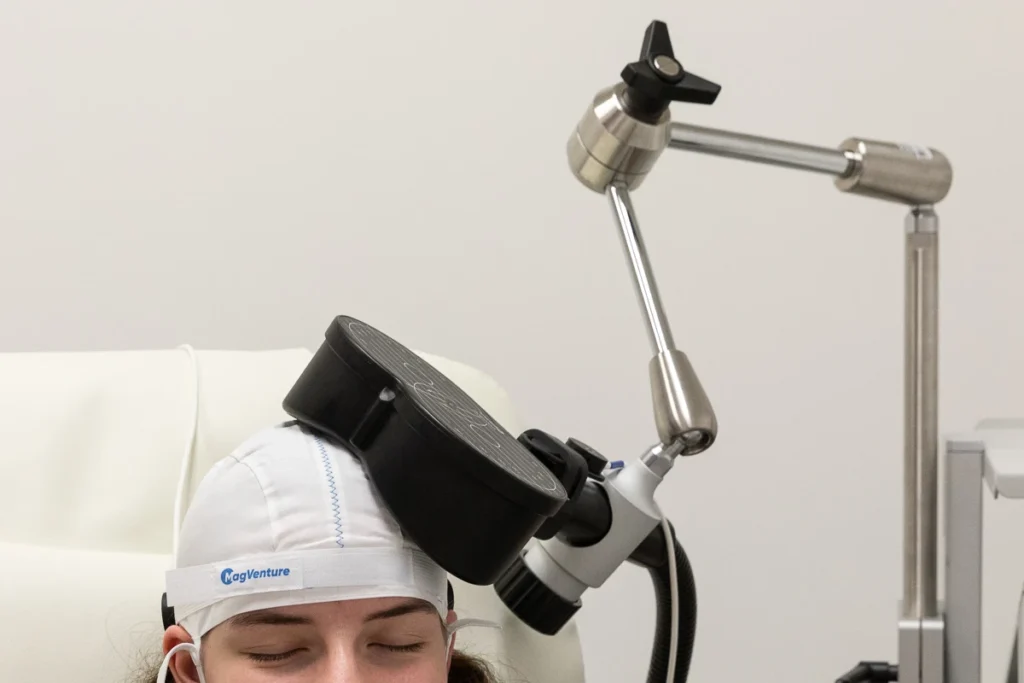
Patient receiving Transcranial Magnetic Stimulation (TMS) therapy with coil positioned on head

Advanced Targeted Treatment

TMS uses magnetic pulses to target specific regions of the brain to treat depression, anxiety, OCD and other conditions

Non-invasive

TMS is non-invasive, well-tolerated, and has few side effects

Patients can eat as normal and continue to drive after treatment. During breaks between treatment sessions, you are free to read, watch TV, or do whatever is most comfortable

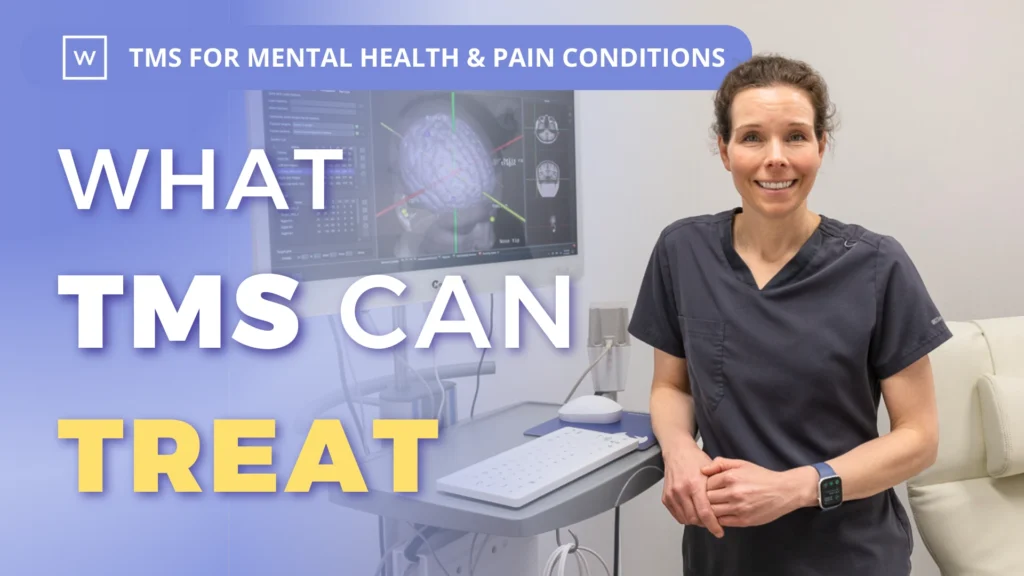
WM TMS treatment room

Rapid Relief

We offer One-Day and One-Week Accelerated TMS

Limited studies show Accelerated TMS to be highly effective — more effective than other forms of TMS

One-Day TMS

One-Week TMS

Treatment Duration

1 day

5 days

Session #

20 sessions

50 sessions

Total Pulses

Approximately 12,000

Approximately 90,000

Enhancements

D-cycloserine and lisdexamfetamine to enhance neuroplasticity

N/A

Protocols

Depression

Depression, Anxiety, OCD

Patient receiving Transcranial Magnetic Stimulation (TMS) therapy with coil positioned on head

Advanced Targeted Treatment

TMS uses magnetic pulses to target specific regions of the brain to treat depression, anxiety, OCD and other conditions

Non-invasive

TMS is non-invasive, well-tolerated, and has few side effects

Patients can eat as normal and continue to drive after treatment. During breaks between treatment sessions, you are free to read, watch TV, or do whatever is most comfortable

WM TMS treatment room

Rapid Relief

We offer One-Day and One-Week Accelerated TMS

Limited studies show Accelerated TMS to be highly effective — more effective than other forms of TMS

One-Day TMS

Treatment Duration: 1 day

Session #: 20 sessions

Total Pulses: Approximately 12,000

Enhancements: D-cycloserine and lisdexamfetamine to enhance neuroplasticity

Protocols: Depression

One-Week TMS

Treatment Duration: 5 days

Session #: 50 sessions

Total Pulses: Approximately 90,000

Enhancements: N/A

Protocols: Depression, Anxiety, OCD

What Is TMS?

Transcranial Magnetic Stimulation, or TMS, is a non-invasive procedure that uses targeted magnetic pulses to stimulate neurons in specific areas of the brain. Originally developed and approved to treat severe or treatment-resistant depression, TMS has also shown effectiveness in alleviating symptoms of anxiety, PTSD, and other mood disorders. We use an accelerated protocol. Accelerated TMS is very rapid, and limited studies show it be far more effective than other forms of TMS.

TMS can be an excellent treatment option on its own or with other treatments.

The Procedure

  • Treatment schedule: The typical course of treatments includes 5 days of treatments, with 10 sessions a day. Each session is about 10 minutes, with a rest period in between. 
  • Treatment Setup: During a TMS session, you’ll sit in a comfortable chair. We’ll position an electromagnetic coil against your head, focused on targeted areas of the brain. No sedation is required and you’ll be awake and alert throughout the procedure.
  • Treatment Sessions: Bursts of calibrated electromagnetic pulses are delivered by the machine.
  • Moving Forward: TMS requires no downtime. Most people can resume normal activities immediately following treatments. We’ll ask for feedback on your progress through the series, and after. Periodic maintenance treatments may help to sustain the results over time.

Why choose TMS?

  • TMS can provide significant relief from depression, even for individuals who have not found success with multiple medications or other treatment interventions. Beyond depression, TMS has been shown to provide benefits for anxiety, PTSD, OCD, and some pain conditions – and may, in some cases, provide benefits for other conditions or symptoms.
  • TMS is non-invasive, does not require anesthesia or sedation, is generally well-tolerated with side effects that are generally mild and transient.
  • TMS can provide rapid relief from negative symptoms and results can be extended over time with the use of maintenance treatments and other treatment modalities.

Why choose Wells Medicine?

At Wells Medicine we lead with practical, effective treatments – focused on the best-available and most-current evidence-based care to benefit our patients. We work to provide compassionate care and personalized treatment plans. We offer flexible scheduling, a convenient location, and comfortable setting. We are an excellent choice and we’d be glad to work with you if appropriate.

Exceptional Care that Makes a Difference

2024 05 22 Wells Medicine Quote Icon 04 c2

I am so grateful to have found Wells Medicine. I highly recommend them for hard to treat depression and anxiety. The staff is wonderful, they run on time, they take their time explaining everything and really go deep with you to help uncover root causes.

2024 05 22 Wells Medicine Quote Icon 04 c2

Dr Wells is truly an exceptional doctor. I can’t say enough about how caring, compassionate, and professional she is. I actually feel heard and understood. The clinical part of her practice has been immensely helpful and her suggestions have provided me with valuable insight and solid resources.

2024 05 22 Wells Medicine Quote Icon 04 c2

Dr. Wells is so patient and caring. She carefully looks over my forms and makes recommendations on ways I can use supplements and therapy to augment my results. The office staff is also very nice. The office is clean and relaxing. I’m very glad to have found her practice!

Next Steps

Book online to schedule an appointment now (We’ll follow up with more information)

Or contact us to discuss this treatment option further

More on TMS:

How Does TMS Work?

TMS uses a focused series of electromagnetic pulses to stimulate targeted areas of the brain (or, in some cases, neurons in other areas of the body). The charged magnetic fields generated by the magnet alter the action of the neurons in the target areas. Appropriate stimulation over repeated sessions can induce changes in synaptic strength, and this neuroplastic change is generally believed to be a principal factor in the therapeutic effect of TMS to treat conditions such as depression.

In practice, TMS involves receiving repeated sessions of electromagnetic pulses that lasting from about 3 to 15 minutes. For each session the patient sits in a comfortable chair while the provider places a coil against their head using the specifics of their anatomy to position the machine. The provider then runs the session while the patient sits still in the chair. The time between sessions may be a few minutes or a few days – depending on the protocol used.

What is Accelerated TMS?

At Wells Medicine we provide accelerated TMS. The accelerated protocol is much more rapid than the standard protocol (often referred to as rTMS, for repetitive TMS) typically takes about 30 treatment sessions over 6 weeks. Studies have also shown the accelerated protocol to be more effective than the traditional protocol.

The accelerated protocol was originally developed at Stanford University and is often referred to as the SAINT Protocol, for Stanford Accelerated Intelligent Neuromodulation Therapy. This innovative approach was designed to deliver a high-dose, high-frequency regimen of TMS over a compressed timeframe, producing rapid and significant improvements in symptoms. While the researchers behind the protocol have commercialized their work and trademarked the SAINT acronym, the core principles of the protocol are derived from well-established and extensively-published TMS research and techniques, and others can implement accelerated TMS methodologies within the scope of existing evidence-based practices.

At our clinic, we offer an accelerated protocol that adheres to the established principles of intensive neuromodulation therapy. The key aspects of this approach are multiple sessions per day over a condensed period, targeting specific areas of the brain to achieve rapid symptom relief. This approach is grounded in the scientific literature and mirrors the rigorous protocols outlined in the original SAINT studies, while incorporating current best practices and details specific to each patient for efficacy, safety, and patient comfort. 

Benefits of TMS
  • Non-Invasive Treatment: TMS is a non-invasive procedure. No anesthesia, sedation or additional medication is required. No surgical intervention is required. 
  • Targeted and Personalized: TMS targets specific areas of the brain responsible for mood regulation, offering precise and effective therapy for the conditions being treated. The treatment are personalized for the patient for strength, anatomy and response for comfort and effectiveness.
  • Minimal Side Effects: Unlike many medications, TMS does not have systemic side effects such as weight gain, sexual dysfunction, or other issues. Side effects are typically transient and diminish quickly, allowing patients to resume their normal activities immediately following treatments.
  • Rapid Results: TMS can provide rapid results, especially when an accelerated or rapid protocol is used – helping many people see results in a few days.
  • Sustained Results: Results may last for weeks, months, or longer. In some cases patients see complete remission. Results may be improved and sustained with periodic maintenance treatments or additional treatment series.
  • Efficacy: TMS is effective for many people with depression, including for people with acute, chronic, difficult-to-treat, or treatment-resistant symptoms. It may also substantially reduce symptoms for anxiety, OCD, PTSD, and some other mood disorders and pain conditions. It can provide substantial and lasting relief for many people.
TMS May Provide Relief For:
  • Depression
  • Anxiety
  • OCD / Obsessive-compulsive disorder
  • Smoking addiction
  • Migraines
  • Bipolar disorder
  • PTSD / Post-traumatic stress disorder
  • Chronic pain
Risks and Side Effects

As with any medical procedure, TMS comes with potential risks and side effects. The most common side effects are transient. These include headaches, nausea, and minor itching or irritation of the scalp. These side effects generally resolve shortly after therapy.

Alternatives to TMS

Alternative treatment options to TMS may include medications that address the target symptoms, psychotherapy or talk therapy treatment options, electroconvulsive therapy (ECT), and infusion treatments. Each alternative has its own set of benefits and considerations, and the best choice will depend on individual patient needs and medical history. TMS is often pursued by people after other interventions or treatment options have proven ineffective – studies consistently demonstrate effective improvements in symptoms with TMS, and it generally has a favorable side effect profile compared to many medications and treatment such as ECT. 

TMS has few contraindications and does not conflict with or prohibit the use of most other treatments or therapies. It is often appropriate to continue your existing medications while receiving TMS treatments. It may also be appropriate to pursue some other treatments while receiving TMS treatments. It can be especially helpful, for instance, to pursue psychotherapy while receiving TMS infusion therapies. Initial research also shows that combining TMS treatments with infusion treatments can be an especially good treatment combination.