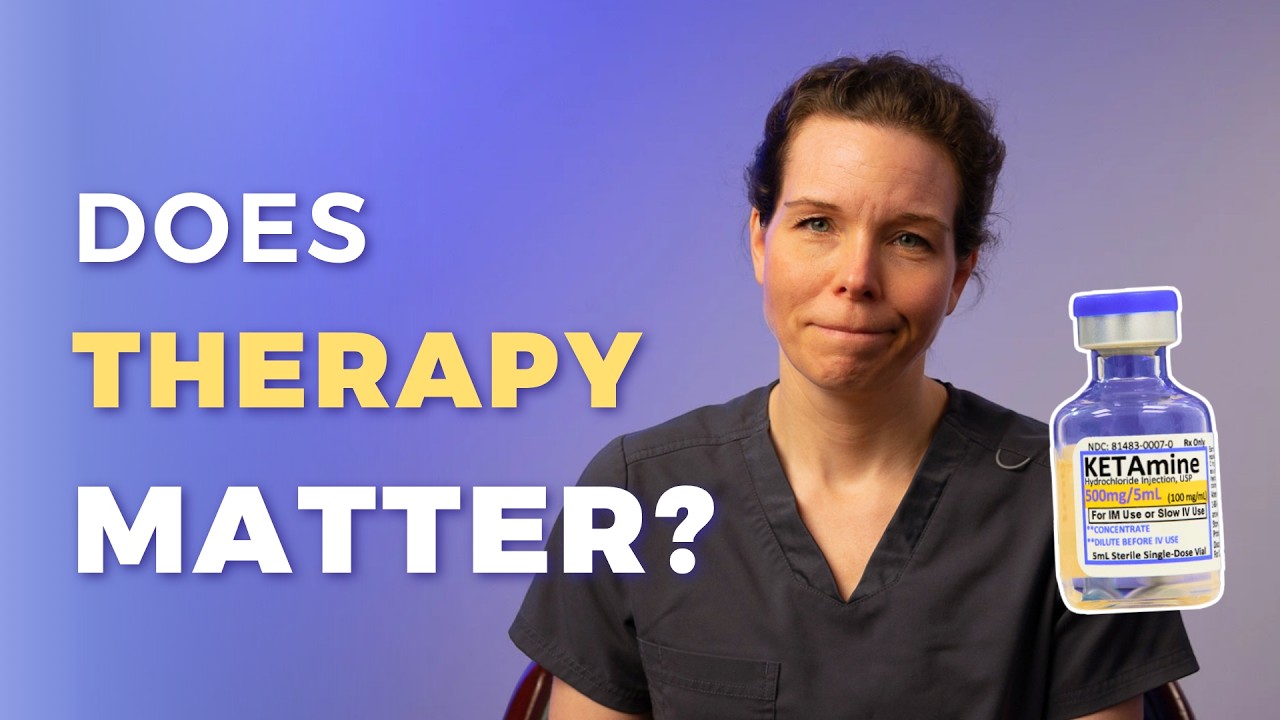
Ketamine is already effective on it’s own — but it can become more effective and its benefit longer-lasting through the aid of therapy and integration work.
The benefit of integration
Ketamine integration is a process of reflecting on your experiences and what you’ve learned through ketamine, and examining how you might apply those experiences to your life. This may involve practices such as talk therapy, including a specific version called Ketamine-Assisted Psychotherapy or KAP, and other reflective practices such as journaling.
In original studies on ketamine treatment, there was no integration work. Researchers simply treated patients with ketamine and evaluated whether it was helpful compared to other patients who did not receive ketamine. In these evaluations, it was determined that 70-80% of patients received a 50% reduction of depressive symptoms by their third infusion — even without integration work.
On it’s own, ketamine is very effective. However, there has been a movement toward adding integration work and therapy to infusions in an effort to make its efficacy greater than 70-80%, and to make it the benefit of infusions last more than three to five weeks, and to make it more than a 50% reduction of symptoms.
There has always been anecdotal reporting of the benefit of integration work with ketamine treatment, and now there is larger data emerging to support it. There is already data regarding the benefit of therapy and integration with other psychedelics, such as MDMA and psilocybin. It is also easy to see in populations that use psychedelics including psilocybin, MDMA, LSD, and ayahuasca recreationally that these medications, independently, do not necessarily create the happiest people in the room.
Incorporating integration into treatment
We strongly encourage patients to pair therapy with ketamine treatment.
We always prescribe patients receiving ketamine treatment This Way Up, a digital cognitive behavioral therapy program. We love when patients come to our clinic already seeing a therapist, or bring their therapist with them to an infusion or have their therapist on video call with them at the end of an infusion.
Generally, we don’t have patients sit with their therapist during the infusion, as treatment doses are high enough that you may not be able to process things during your infusion. However, within 24-72 hours after treatment is a great time to speak with a therapist, have an integration session, or journal.
How integration is helpful
When patients have a transformative ketamine journey, we’ll often hear is that what was so impactful is that things came up for them that they were able to integrate into their life. They realized that they needed a work-life balance, or that they needed to spend time with their loved ones, or that they needed to solve a relationship issue they’ve been having, or they needed to forgive themselves for something that happened in the past.
Therapy can be helpful for figuring out how to tangibly incorporate those realizations into your life. Therapists often have the experience needed to give you guidance or resources on how to move forward in these situations, and are able to offer a different perspective that you have not considered.
Sometimes, therapists can help you interpret confusing thoughts or experiences you’ve had after a ketamine infusion. With any dream, or near-death experience, or psychedelic trip, there may sometimes be things you can take away from that experience to create meaning in your life. With an outside perspective, a therapist may be able to see parallels between an experience you had during a ketamine infusion and your situation that you can’t — and help you determine how to apply those meanings to your life.
About Us
Wells Medicine is a Houston-based practice designed to provide meaningful care for mental health. Providing targeted interventional treatments for Depression, Anxiety, OCD, PTSD and other conditions, with Ketamine Treatments, Stellate Ganglion Blocks, TMS, and Nitrous-Oxide Treatments. Focused on comprehensive care and integration with Psychiatry, Psychology, and Support Services. We are evidence-based, patient-focused and mission-driven.
The content here is for informational purposes and should not be relied upon for medical decisions. For the details of your specific medical conditions and treatments consult your doctors or other qualified healthcare professionals.