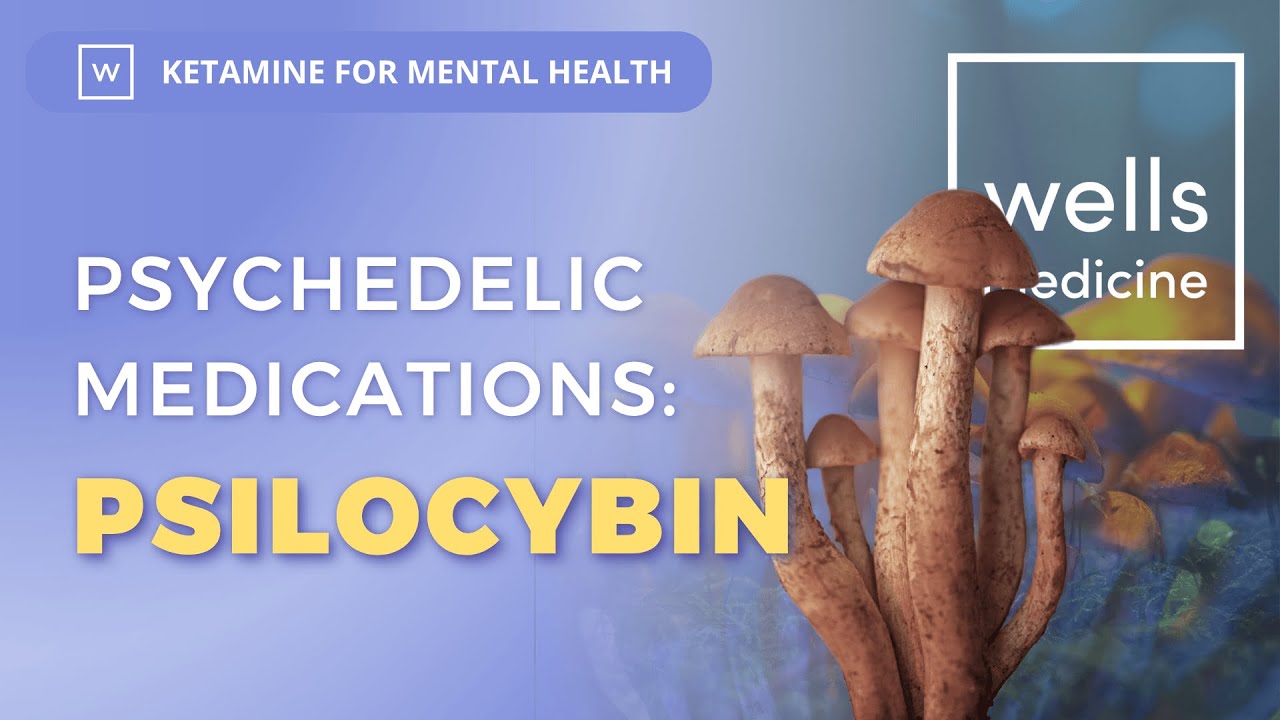
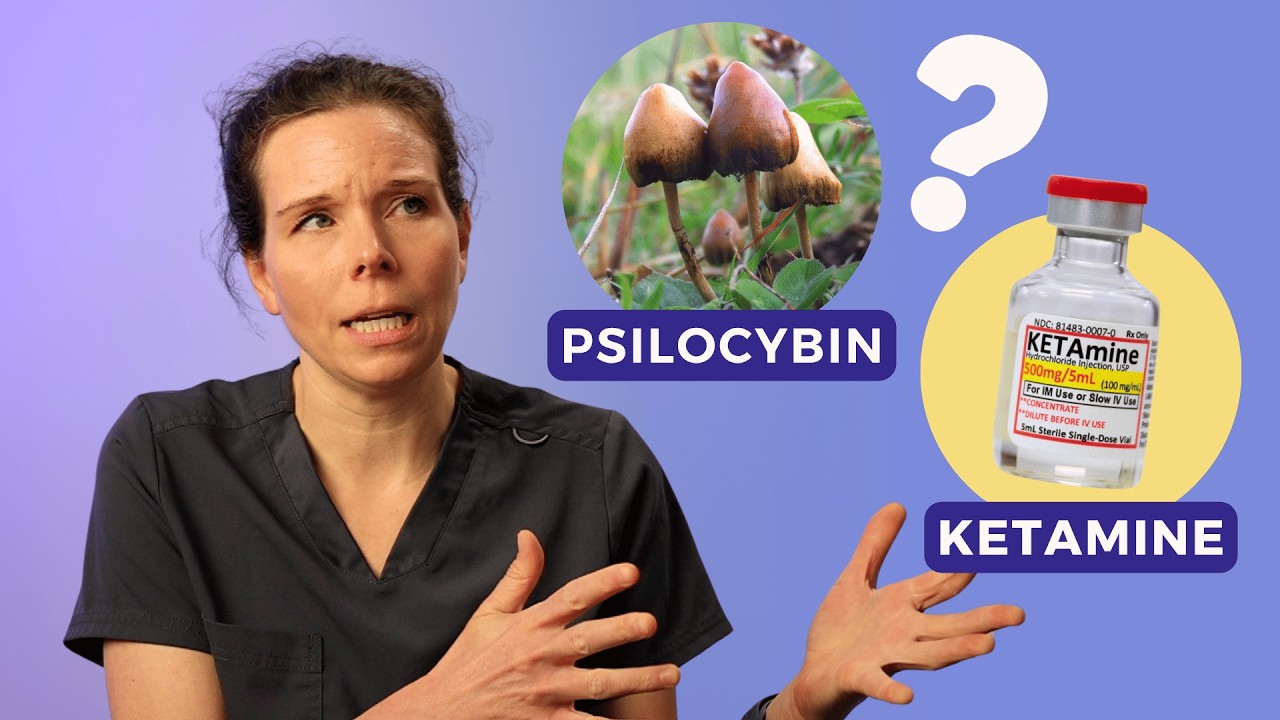
Psilocybin is a psychedelic medication that holds promise for mental health treatment. It has some notable differences from ketamine
Other Psychedelic Medications
Similar to ketamine, other psychedelic medications may be used for mental health treatments. Ketamine is a legal psychedelic when used in an appropriate medical setting, with a significant and growing history of research and clinical use. These other psychedelics are not as well-studied as ketamine and do not have the same framework for use. They differ from ketamine and from each other in some interesting and important ways.
For the purpose of this video and post, we will use the term ‘medication’ to mean any substance that has effects in the body.
Psilocybin
What is Psilocybin?
Psilocybin is a natural compound found in certain mushrooms that grow wild in many places, including large portions the United States. Psilocybin, often called ‘magic mushrooms,’ has been widely used for recreational and medicinal purposes through history. The trip or experience is generally considered pleasant, even euphoric, with users reporting a significant mount of visual stimulus. The active trip or journey often lasts about 4 to 6 hours.
Many people have great interest in psilocybin due to its natural origin in particular. However, it is important to remember that there are many natural compounds that come from mushrooms, some of which are poisonous and toxic, and to always be careful with substances even if they are natural.
Psilocybin is not currently legal in the state of Texas. There is a growing body of promising research and a great deal of interest in decriminalizing it. We may see changes in the near future permitting its use in clinical settings outside of limited research studies.
Psilocybin as a Treatment Option
It is easy to find anecdotal reports of people having ‘magical mushroom’ experiences and of then being cured, or substantially cured, of their mental health conditions indefinitely. Psilocybin may appear to be a ‘one-stop’ option where a single session can be a permanent cure. However, this does not seem to be the case upon careful examination.
While we have not seen patients treated with psilocybin through medical means in Texas we do speak with patients who have recreationally used psilocybin or who sought medical treatment in states where it is decriminalized. These patients did not appear to see forever-benefits from psilocybin, but rather some appeared to see benefits for about six months – and these benefits came after a significant, six-hour long, sometimes very nauseous, sometimes intense, experience… that they then processed over the course of several weeks.
It is difficult to study or work with psilocybin as it is not FDA approved or legal. It is decriminalized in several states and cities in the United States, and in several countries, but this is not the same thing as legal status. Decriminalization means that police and judges will not prioritize charging and arresting people for the possession of a substance. This is very different from a legal, FDA approved medication where everything is above board, with testing, oversight, and accountability — which would allow psilocybin to be studied much more efficiently and thoroughly. In a similar way, we didn’t have great data on marijuana before it was legalized in several states, and only now are we beginning to see a decades worth of data on the benefits and drawbacks of marijuana.
Do we recommend psilocybin?
When patients ask us if we recommend psilocybin, the first thing we must say is that it is still not legal in the state of Texas, and so we can’t recommend it. Additionally, while there may be some lasting benefits, the one-and-done approach that the popular press and proponents of psilocybin promise is not something we see in the research and particularly from first-hand reports. Instead, the majority of benefits seems to last around six months, after a very intense, rather laborious six-hour trip… and not everyone receives benefit.
Psilocybin was, at one point, legal. In the late sixties and seventies when there was new and broad awareness due to the advocacy of Timothy Leary at Harvard, and others, promoting its potential for expansion of human consciousness, a generation of people used psilocybin very liberally. These people don’t appear to have all been freed from their depression, anxiety, and other mental health challenges.
When and where it is permitted, psilocybin should be done within a therapeutic context. Recreational use is unlikely to have the structure and scaffolding needed for patients to integrate positive changes into their life most effectively – and perhaps most importantly, the dosing and experience is almost certainly not well controlled in a recreational setting. There’s a significant percentage of people who have side effects like continued hallucinations and perceptual difficulties, with some people having lasting fraught memories and side effects from the experience itself. We’ve treated patients, for instance, who believed they had PTSD from their psilocybin journey.
We can’t recommend enough – if you are going to do psilocybin – to do it somewhere that it is legal and where there is accountability and oversight in a therapeutic context. Anticipate that if you do receive benefit, it may last around six months.
A Bright Future
The studies and anecdotal reports to date collectively suggest a lot of reasons to be optimistic about psilocybin as a treatment for depression and other mental health symptoms and conditions. The drug is broadly well-tolerated and even enjoyable, the side effects may be mostly minor, and the benefits may be meaningful and fairly durable (even if it is not a one-time-cure-all). With further research and development of dosing and administration protocols, with greater understanding of the expected benefits in different cases, and with decriminalization for clinical use, psilocybin may prove to be a useful and important treatment option in the near future.
About Us
Wells Medicine is a Houston-based practice designed to provide meaningful care for mental health. Providing targeted interventional treatments for Depression, Anxiety, OCD, PTSD and other conditions, with Ketamine Treatments, Stellate Ganglion Blocks, TMS, and Nitrous-Oxide Treatments. Focused on comprehensive care and integration with Psychiatry, Psychology, and Support Services. We are evidence-based, patient-focused and mission-driven.
The content here is for informational purposes and should not be relied upon for medical decisions. For the details of your specific medical conditions and treatments consult your doctors or other qualified healthcare professionals.