Repetitive vs. Accelerated TMS – What’s the difference?

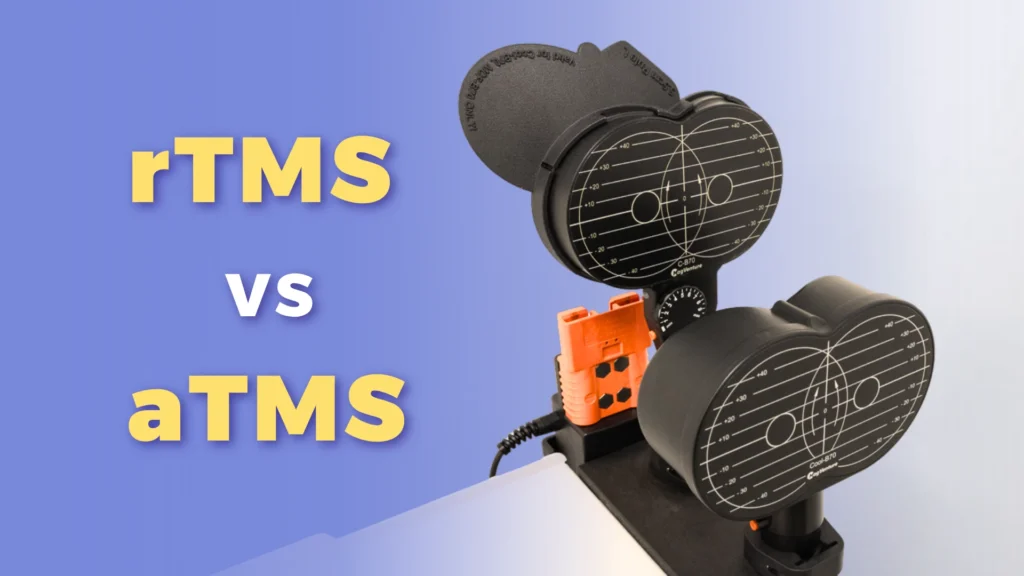
webThumb rtms vs atms

TMS treatment is evolving, and patients now have more options to fit their lifestyle and mental health needs. New protocols provide effective symptom relief and require less time in the office. Both repetitive and accelerated TMS are great for treating severe or treatment-resistant symptoms of depression, anxiety, OCD, and other mood disorders.

What is TMS?

TMS is a non-invasive procedure that uses targeted magnetic pulses to stimulate neurons in specific brain regions, and in some areas of the body for some pain treatments. These pulses are sent through an electromagnetic coil placed on the scalp.

It was originally created for neurophysiological study and later found useful for treating severe or treatment-resistant depression. However, TMS has been shown effective in alleviating symptoms of anxiety, OCD, other mood disorders, some pain conditions, and some other conditions and symptoms. TMS is often considered an excellent treatment option because it is non-invasive, and has minimal side effects. Patients remain awake during treatment and typically drive home and return to work immediately afterward. TMS is also shown to provide substantial and lasting relief for many people, even for people with treatment-resistant symptoms.

The two main approaches

The two most commonly used approaches to TMS for depression and other mood disorders are Repetitive TMS (rTMS), also known as conventional TMS, and Accelerated TMS (aTMS).  rTMS has been an FDA approved treatment method for treating major depressive disorder since 2008 – compared to the first FDA approval for accelerated TMS in 2022. Since having more time in use, there is more research published on the response and benefits of rTMS. Additionally, more FDA approvals have been for rTMS machines and protocols. Most clinics and providers are familiar with rTMS. Growing evidence supports the similar yet quicker protocol, known as Accelerated TMS (aTMS), with limited research showing higher remission and response rates in a shorter period of time. 

Both procedures may be used to treat depression and other conditions; however, there are some differences that stand out:

Repetitive TMS

  • FDA approved 2008
  • Longer treatment and session duration
  • Gradual relief from symptoms
  • Widely covered by insurance, with necessary diagnosis and supporting documents
  • Appropriate for those okay with gradual relief, prolonged time with providers, able to travel multiple days, and able to take necessary time off of work

Accelerated TMS

  • FDA approved 2022
  • Shorter treatment and session duration
  • Rapid relief from symptoms
  • Excellent results
  • Limited insurance coverage
  • Appropriate for those seeking the best-possible treatment approach, looking for rapid relief, and who may be unwilling or unable to take time off every day for conventional TMS

Both TMS protocols are effective treatment options. However, it is up to the patient and provider to determine which treatment type is the best fit. There are multiple cases where a gradual onset to treatment and daily sessions would benefit patients:

  • Older patients may benefit from the daily interaction if they do not currently see people throughout their day
  • Patients with severe depression may benefit from the daily encouragement to leave their home to promote positive behavioral and routine changes
  • If the patient is reliant on insurance to cover the costs, there is a greater likelihood that rTMS would be approved
  • If the treatment clinic is within a reasonable driving distance and the patient is committed to daily treatment

There are also multiple cases that would hinder a patient from benefiting from rTMS and would benefit from accelerated TMS:

  • The paitent is in need of rapid relief from symptoms (e.g., suicidal ideation)
  • The patient is unable to take extended time off from work
  • The patient is unable to travel or the treatment clinic is located too far away for daily treatment
  • Patients that do not have insurance or are not planning on relying on insurance to cover the costs 
  • Patients receive 50 total sessions during the span of 1 week. The greater number of sessions result in higher remission rates
  • aTMS is the quicker treatment option, consisting of 10 daily sessions for a week or 20 sessions in one day

A note about insurance: Wells Medicine offers a direct care model that provides the best available TMS treatments supported by research; however, insurance is unlikely to cover these advanced off-label protocols and we do not take insurance for treatments. As the field continues to expand and research continues, accelerated TMS protocols may be covered by insurance and may be FDA approved in the future.

Side Effects

Both protocols have comparable side effects (e.g., headaches, treatment spot discomfort) and risks. Highly sensitive patients may experience increased discomfort with Accelerated TMS as it utilized multiple sessions in a short period of time, meaning there is less time and rest between sessions to recover from minor side effects. However, each experience is individualized and some may find aTMS more manageable. Patients are capable of driving and returning to daily activities (e.g., work or school) after treatment.

Results

Here is a glance into the response and remission rates provided by research for each protocol of rTMS and aTMS:

Repetitive TMS (rTMS)

Accelerated TMS (aTMS)

Session #

30 (4 week) – 36 (6 week)

20 (1 day) – 50 (1 week)

Session Length

20 – 40 minutes

3 – 10 minutes

Frequency

1 Session per day

10 or 20 Sessions per day with breaks

Treatment Duration

4 – 6 weeks

1 – 5 days

Protocols

4 – 6 Week + Taper Period

1 Day, 1 Week

Intensity
(Motor Threshold)

90 – 120%

90 – 120%

Technology

High Frequency 10Hz

Intermittent Theta Burst (iTBS)

Insurance

More Guaranteed

Less Guaranteed

Machines

Magventure, NeuroStar, BrainsWay, Magstim, Apollo, Nexstim, CloudTMS, Soterix

Magventure, BrainsWay, Magus Medical, NeuroStar

From rTMS to aTMS

Regardless of the protocol, TMS is a great treatment option for individuals seeking an alternative treatment to help reduce the symptoms of different conditions, including depression, OCD, and anxiety. We are happy to offer our patients accelerated TMS treatment options at Wells Medicine. 

About Us

Wells Medicine is a Houston-based practice designed to provide meaningful care for mental health. Providing targeted interventional treatments for Depression, Anxiety, OCD, PTSD and other conditions, with Ketamine Treatments, Stellate Ganglion Blocks, TMS, and Nitrous-Oxide Treatments. Focused on comprehensive care and integration with Psychiatry, Psychology, and Support Services. We are evidence-based, patient-focused and mission-driven.

The content here is for informational purposes and should not be relied upon for medical decisions. For the details of your specific medical conditions and treatments consult your doctors or other qualified healthcare professionals.