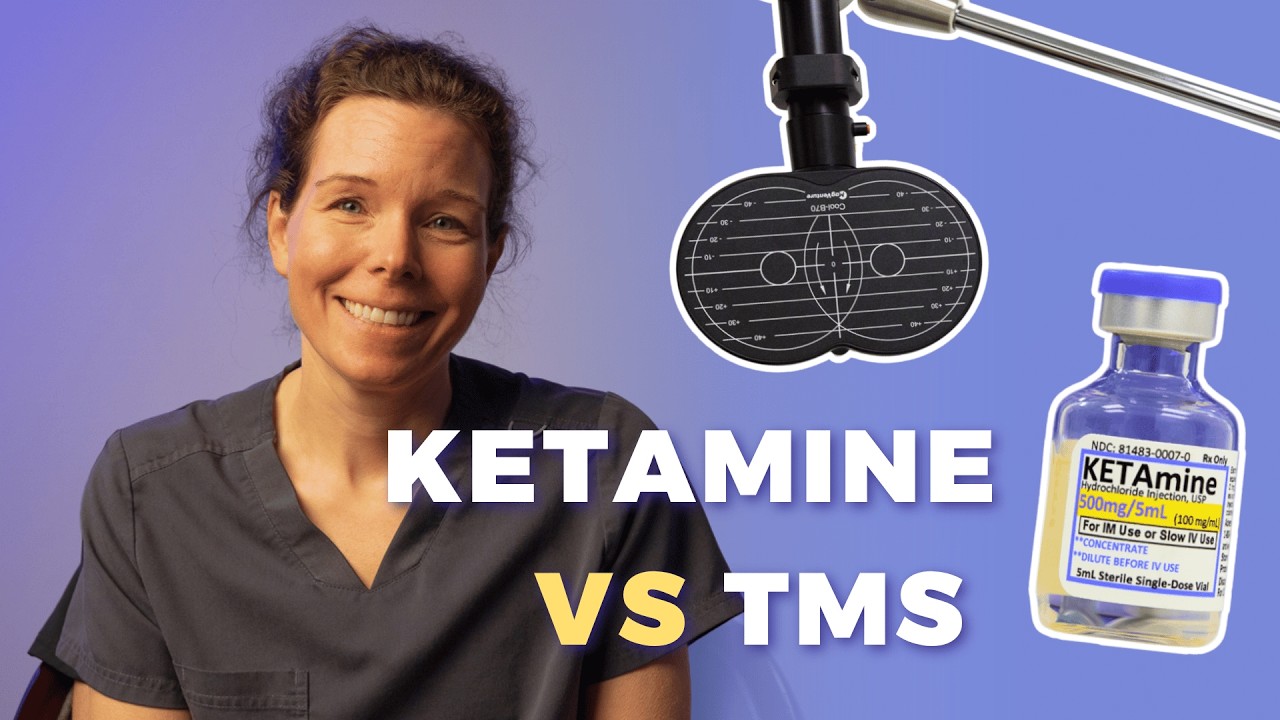
Ketamine and accelerated TMS are advanced interventional treatments that may provide significant benefits for symptoms of depression, anxiety, PTSD, and OCD. There are key differences that can help guide a decision when comparing these two treatments.
What’s the difference?
Ketamine and TMS are both potentially useful treatments for depression, anxiety, PTSD, and OCD. Both provide significant symptom reduction for many people. The two treatments are also surprisingly similar in the way that they work – stimulating healthy neural activity in a fundamentally similar way.
There are interesting differences between the two treatment options:
How They Work
Ketamine targets the glutamate system globally or systemically in neurons throughout the body, and particularly in the brain where most of our neurons are located. It promotes neuroplasticity – toward healthy, active neural connections and activity – which may help shift thought patterns and disrupt rumination loops and fight-or-flight loops. This makes ketamine well-suited to treat multiple comorbid conditions at once, such as depression alongside anxiety and PTSD.
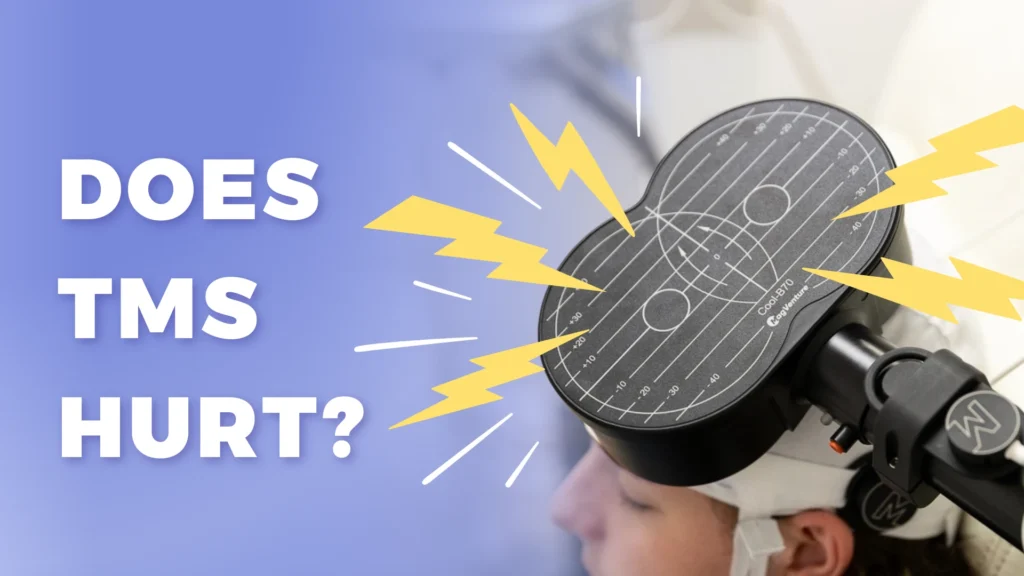
TMS is very local. The electromagnetic coils used with TMS typically target a very specific area of the brain to treat a specific mental health condition. While TMS may be useful in treating more than one condition, it promotes neuroplasticity in a local or specific area or neurons.
Speed of results
Ketamine works very quickly. Some patients may notice a difference after only one treatment, and studies (including of our clinical data) regularly show that 70-80% of patients experience a significant reduction in depressive symptoms in 2-3 treatments – which may be in the first week or two of treatments.
Accelerated One-Day and One-Week TMS also work very quickly, often within 1-2 weeks.
Duration of benefit
Ketamine and TMS treatments typically require occasional boosters to sustain benefits that patients see.
After the initial series of ketamine treatment, patients typically benefit from an additional infusion starting every three to five weeks to sustain results, with adjustments to the frequency of maintenance treatments moving forward as appropriate.
The benefit of TMS treatment may last longer based on the limited studies and clinical information available. After the initial series of TMS, patients typically benefit from additional maintenance sessions beginning once or twice a month and extending out as appropriate.
Consciousness change & treatment restrictions
Ketamine is a dissociative anesthetic and patients can expect to see consciousness changes during treatment. The infusion dose is curated for each patient, and the experience is typically described as ‘floaty’ and ‘peaceful‘ and may include some auditory or visual sensations. The dissociative effects of ketamine wear off quickly, but is a notable part of the experience. A ketamine infusion involves an IV, the administration of medications and requires restrictions such as no eating or drinking before an treatment and no driving after an treatment.
TMS treatment does not involve sedation and is considered non-invasive. Patients do not need to fast before treatment, will not receive an IV, do not experience consciousness changes, and are able to continue driving after treatment.
Should I pursue ketamine, or TMS?
These treatments can be particularly useful, especially as additions to conventional medications and therapies. They may be useful even when other treatments have failed to provide substantial or meaningful results. The information here is not exhaustive and does not cover all the nuances of the treatments or the specifics for each individual, but may help in determining which treatment to pursue.
Both ketamine treatments and TMS can be excellent options for treating depression, anxiety, OCD, PTSD, and other mood disorder and pain conditions – including treatment resistant symptoms. In many cases, either would be appropriate and the decision of which to pursue can be guided by factors such as personal preference, recommendations by your physicians or other providers, considerations of cost, and schedule constraints. … You may also consider pursuing BOTH ketamine and TMS – either one after the other or even at the same time.
Ketamine
Accelerated TMS
Global administration
Targeted treatment
Results in 2-3 infusions
Results in 1-2 weeks
Maintenance every 3-5 weeks
May last longer, although starring with regular maintenance is prudent
IV or IM administration
Non-invasive
Involves consciousness changes
No consciousness changes
Fasting & driving restrictions
No fasting or driving restrictions
About Us
Wells Medicine is a Houston-based practice designed to provide meaningful care for mental health. Providing targeted interventional treatments for Depression, Anxiety, OCD, PTSD and other conditions, with Ketamine Treatments, Stellate Ganglion Blocks, TMS, and Nitrous-Oxide Treatments. Focused on comprehensive care and integration with Psychiatry, Psychology, and Support Services. We are evidence-based, patient-focused and mission-driven.
The content here is for informational purposes and should not be relied upon for medical decisions. For the details of your specific medical conditions and treatments consult your doctors or other qualified healthcare professionals.